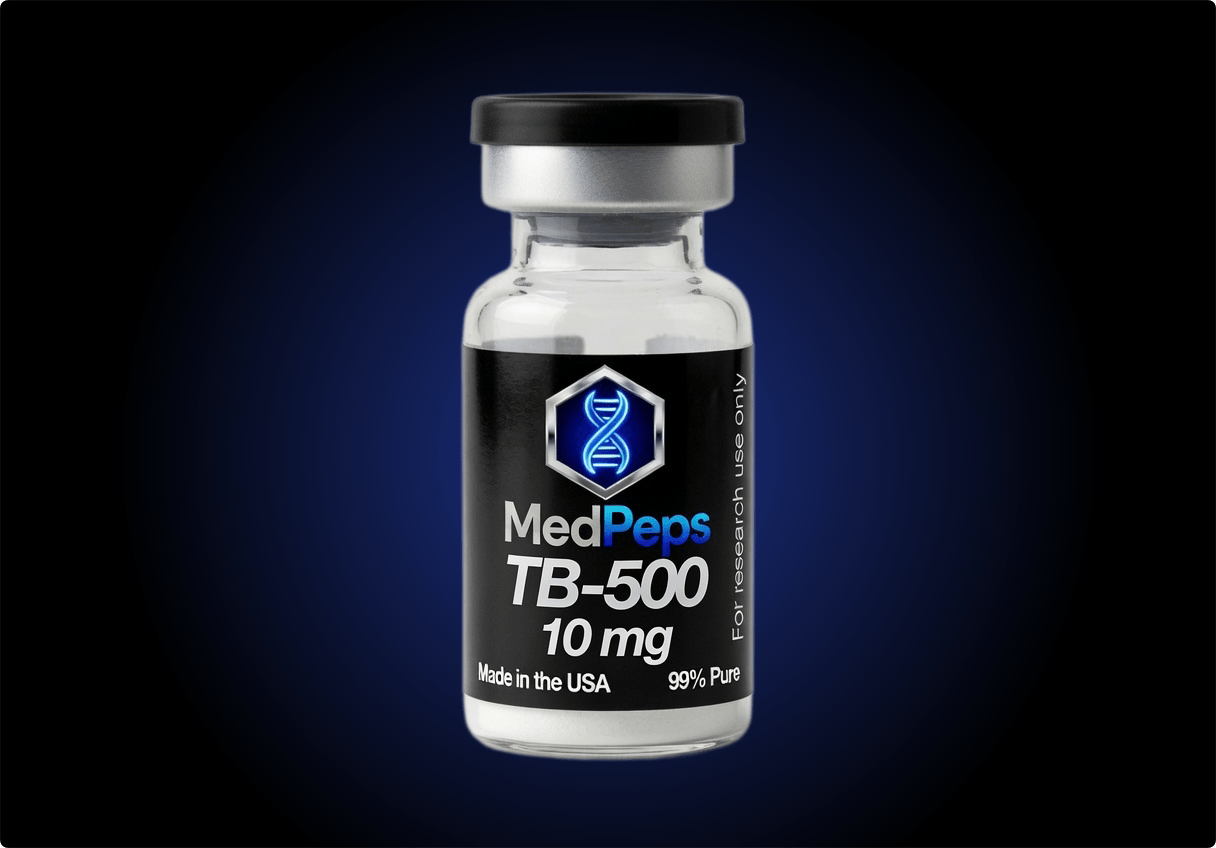
Being studied for:
- Wound healing – Studied for its potential to promote tissue repair and accelerate healing of skin and soft-tissue injuries.
- Muscle recovery – Investigated for possible benefits in muscle regeneration and recovery following injury or strenuous activity.
- Tendon and ligament repair – Animal studies have explored its effects on healing connective tissue injuries.
- Angiogenesis (new blood vessel formation) – Research suggests it may support the development of new blood vessels, which could aid tissue repair.
- Inflammation modulation – Studied for its potential ability to influence inflammatory responses during the healing process.
- Cell migration – Thymosin Beta-4 plays a role in cell movement, an important component of wound healing and tissue regeneration.
- Cardiac tissue repair – Experimental research has examined whether it may support healing and regeneration following heart injury.
- Corneal healing – Investigated for potential applications in healing injuries to the cornea and other ocular tissues.
- Fibrosis reduction – Some preclinical studies have explored whether it may help reduce scar tissue formation in healing tissues.
- Nerve regeneration – Early animal research has evaluated its potential role in supporting nerve repair after injury.
Proposed Mechanisms Being Studied
- Regulation of actin, a protein involved in cell structure and movement.
- Promotion of cell migration and differentiation.
- Support of angiogenesis and tissue remodeling.
- Modulation of inflammatory signaling pathways.