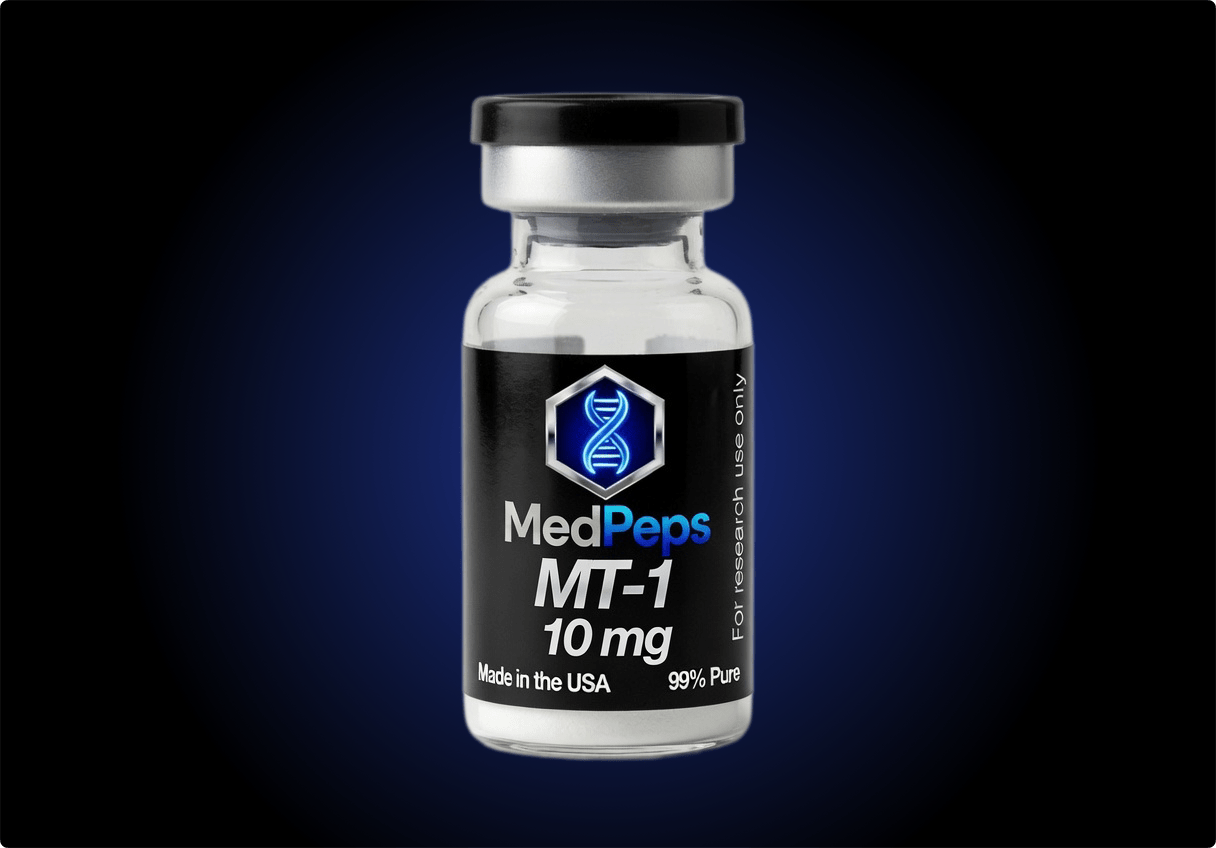
Being studied for:
- To stimulate melanin production
- To develop a deeper and long lasting tan
- Naturally increasing skin pigmentation
- To reduce need for UV exposure
- MT-1 generally produces a slower, more gradual tanning effect than Melanotan II (MT-II) and is associated with fewer off-target effects due to its greater selectivity for MC1R.
- Studied for reducing sensitivity to sunlight in individuals with certain photosensitivity disorders.
- Research has investigated its potential to decrease the frequency and severity of phototoxic reactions following sun exposure.
- The pharmaceutical form of MT-1, Afamelanotide, is approved in several countries for the treatment of Erythropoietic Protoporphyria, a rare condition that causes severe pain when skin is exposed to sunlight.
- Investigated for its antioxidant and anti-inflammatory properties, which may contribute to skin protection.
- Unlike MT-II, MT-1 has not been a major focus of research for appetite suppression or sexual function.
- Commonly studied for:
- Skin pigmentation
- UV protection
- Photosensitivity disorders
- Photoprotection and skin health
- Melanin biology